
Fulvic Acid: What It Is, Benefits, and How to Use a Fulvic Foot Soak
The Short Answer
Fulvic acid is a naturally occurring compound from soil and ancient plant matter, packed with trace minerals and carrying a negative charge that binds to toxins and heavy metals. People use it to replenish minerals, support nutrient absorption, and help the body move things out. My favorite way to use it is as a fulvic foot soak.
In this guide: what fulvic acid is, its benefits, how it differs from humic acid, how to do a fulvic foot soak step by step, what to expect, and whether it is safe.


“Fulvic is a really good binder. Anything that is a negatively charged herb is going to bind to the positively charged toxin and help remove it out of your body. I had parasites come out of my feet in a fulvic soak, and I have it on video.”
Kim Rogers, Founder of RogersHood Apothecary
Fulvic acid is one of those things I wish I had known about years before I did.
When I was deep in my own healing, clearing parasites, mold, and heavy metals, I kept running into the same lesson. It is not enough to stir things up. You have to give your body a way to carry them out. Fulvic acid turned out to be one of the most useful tools I found for exactly that, and it does a lot more than binding too.
So let me walk you through the whole thing. What fulvic acid actually is, what it does, and the simple way I use it at home.
What Is Fulvic Acid?
Fulvic acid is a naturally occurring compound that forms as ancient plant and organic matter breaks down in soil, peat, and humic deposits over a very long time. It is part of what makes rich, living soil actually rich.
Two things make it special. First, it is loaded with trace minerals and electrolytes in a form your body can readily use. Second, it carries a negative electrical charge. That charge is the key to a lot of what it does, because positively charged toxins, heavy metals, and waste get pulled toward it like a magnet.
Its molecules are also very small, which is part of why people talk about fulvic acid as being so bioavailable. It moves easily and it plays well with the minerals it carries.
None of this is new. It is one of the oldest inputs to health there is, straight out of the earth. We just got very far away from soil, and from the minerals that used to come with our food.
Where Does Fulvic Acid Come From?
To really get why fulvic acid matters, it helps to know where it comes from and why we are so short on it.
Over thousands of years, plants and organic matter break down in the ground. Microbes do their work, and what is left behind is a rich, concentrated deposit of humic substances, with fulvic acid as one of the most active parts. It is basically the earth’s own recycling system, turning old life into the minerals that feed new life.
Here is the problem. Our soil is not what it used to be. Decades of industrial farming, monocrops, and heavy chemical use have stripped a lot of that mineral richness out of the ground. So the food grown in that soil carries fewer minerals than the same food did generations ago. We are eating more and getting less.
That is a big part of why so many people feel depleted no matter how well they think they are eating. Going back to a clean fulvic and humic source is one simple way to reconnect with minerals we used to get straight from the ground.
Fulvic Acid Benefits
Here is why people reach for fulvic acid. I always want to be honest that a lot of this is traditional use and emerging research rather than a magic promise, but the reasons it is valued are consistent.
Why People Use Fulvic Acid
- Trace minerals: replenishes the minerals modern food and soil are often short on
- Nutrient absorption: helps your body actually take up and use nutrients
- Binding and detox support: its negative charge grabs positively charged toxins and heavy metals
- Energy: people often describe steadier, cleaner energy
- Gut support: traditionally used to support a healthy gut environment
- Skin: as a soak, it tends to leave skin noticeably soft and refreshed
- Antioxidant activity: studied for its antioxidant and chelating properties
The binding piece is the one I care about most, because it is where fulvic fits into cleansing. When your body is releasing toxins, you want something there to catch them so they leave instead of recirculating. Research has shown that fulvic acid has real chelating and detoxification properties. That is not fringe science. It is just not talked about enough.
And the mineral side matters just as much. So many of us are running low on trace minerals, and that shows up as fatigue, cravings, and that generally depleted feeling. Fulvic acid is one way to put some of that back.
Fulvic Acid vs Humic Acid: What’s the Difference?
You will almost always see fulvic and humic acid mentioned together, because they come from the same place. Both are humic substances that form as organic matter breaks down.
The simplest way to think about it is size and reach. Fulvic acid molecules are smaller and more soluble, so they move easily and are known for carrying minerals into cells and binding toxins. Humic acid molecules are larger and tend to work more in the gut, grabbing onto bigger toxins and supporting the terrain there.
They complement each other, which is exactly why a good mineral soak uses both. You get the small, mobile fulvic and the larger, grounding humic working together.
How to Use a Fulvic Foot Soak
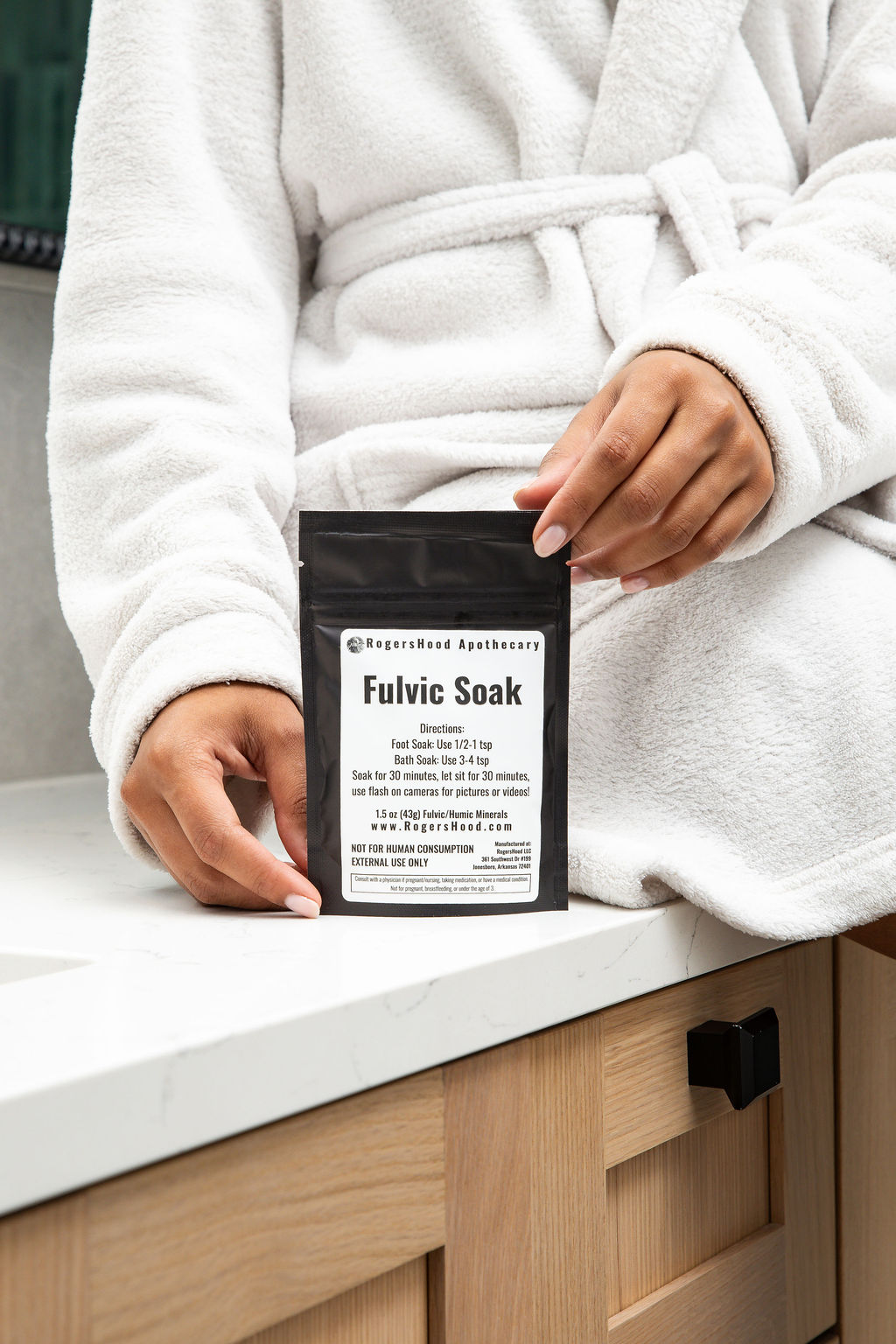
My favorite way to use fulvic is as a soak, either a foot soak or a full bath. Your skin is an exit point, and when your pathways are open, your body will use it. A fulvic soak supports that process gently through the skin.
How to Do a Fulvic Foot Soak
- 1. Add your fulvic soak to warm water in a basin for your feet, or a tub for a full bath.
- 2. Soak for about 30 minutes. First-timers often start with feet only.
- 3. Sip water while you soak and take it slow, especially your first few times.
- 4. After you get out, let the water sit for about 30 minutes.
- 5. Look at the water. People often see flecks and floaties that were not there before.
- 6. Rinse off, and give the tub a good clean afterward.
Start with a foot soak to get comfortable. Once you know how your body responds, you can move up to a full bath. A lot of people in our community use the Fulvic Soak a few times a week, and one bag stretches to several foot soaks. There are full step-by-step instructions on our product instructions page too.
You can also take fulvic acid internally as a liquid or powder supplement, usually a few drops in water. I personally lean on the soak because it is simple, it feels good, and you get to actually see something happening.
How Often Should You Do a Fulvic Soak?
There is no single rule, but here is what works for most people.
A soak once or twice a week is a comfortable rhythm for general support. When you are actively cleansing, a lot of people do it a little more often to give the body an extra exit pathway while things are moving. And plenty of people simply keep it as a weekly wind-down ritual, the way they used to do an Epsom salt bath.
Listen to your body. If a soak leaves you tired, space them out and hydrate more. If you feel great, keep going. Because it is gentle and topical, it is easy to make it a regular part of your routine rather than a one-time event, which is really the whole philosophy behind how I do all of this.
What to Expect From a Fulvic Soak
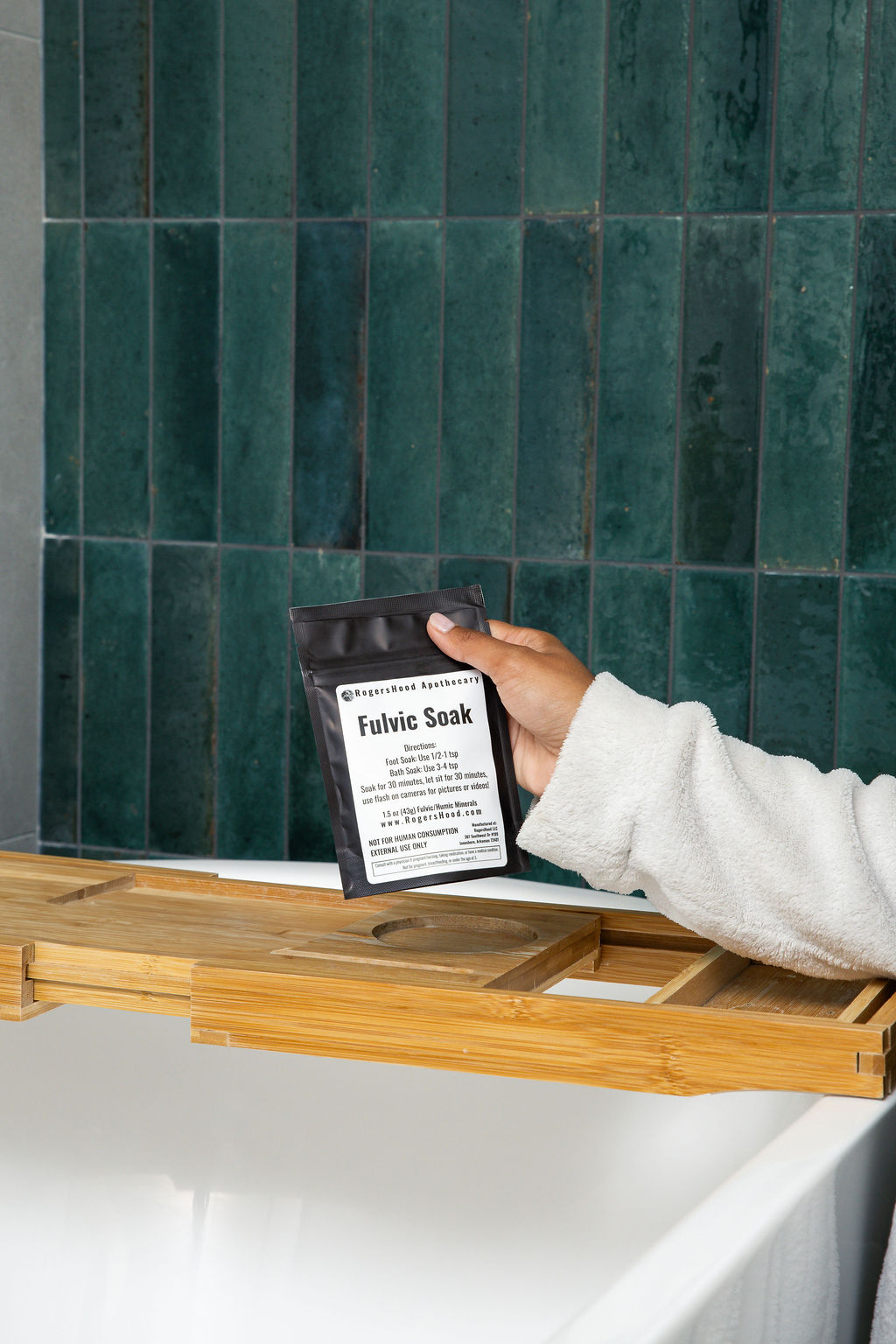
The first time can be a little surprising, so let me set expectations.
The water often turns dark, especially in a mineral soak that includes activated charcoal. That is normal. During the soak you might feel a light tingling in your feet, or feel warm. Afterward, when the water settles, a lot of people notice flecks, floaties, or a reflective sheen that was not there when they started.
Some people also feel a mild version of die-off in the day or two after, especially if they are mid-cleanse. A little tiredness or a headache. That usually passes, and most people describe feeling lighter and more refreshed once it does. And almost everyone comments on the same small thing: their skin and feet feel wonderfully soft.
What Our Community Says ★★★★★
“I’ve replaced my weekly Epsom salt baths with the Fulvic Soak as my weekly detox routine. It works as a wonderful hair conditioner too. It makes my hair and skin super soft.”
Tess Verified Customer
If you want the deeper dive on the soak specifically, I wrote a whole piece on fulvic acid soak benefits.
Fulvic Acid for Skin and Hair
One benefit almost nobody expects is what fulvic acid does for your skin.
Because it is mineral-rich and gentle, a fulvic soak tends to leave skin remarkably soft. People with dry, rough patches often notice a real difference after just one soak, and some use it in place of their usual bath soak entirely. If you immerse your hair, it can act like a natural conditioner too, leaving it soft without anything synthetic.
There is also a bigger-picture reason skin responds. So many skin issues, from breakouts to stubborn patches, are really your body trying to push something out through its largest organ. When you support that process and give your body minerals it is missing, your skin often calms down as a happy side effect. I always say your skin is talking. Fulvic is one gentle way to listen.
Fulvic Acid and Parasite Cleansing: Why Binding Matters
This is where fulvic really earns its place in my routine. When you do a cleanse, things get stirred up. Parasites, heavy metals, mold, and other toxins start moving.
If those toxins do not have a way out, they get reabsorbed, and that is when you feel worse instead of better. Most people skip the binder and then wonder why they feel awful. When a worm dies, it dumps everything it was holding, and a single one can hold six to eight times its weight in heavy metals, spores, and more.
A binder catches that. Internally, we use a charcoal and cinnamon binder called Cinnabin. Externally, a fulvic soak adds another exit pathway through the skin. They work on the same principle and they complement each other. That is why the Fulvic Soak is included in our Ultimate kits, and why so many people run it alongside a natural parasite cleanse.
Try It for Yourself
The Fulvic Soak
Our fulvic and humic mineral soak, just $15. Use it as a foot soak or a full bath to support detox through the skin, replenish minerals, and leave your skin soft. One bag stretches to several soaks.
Shop the Fulvic SoakHow to Choose a Quality Fulvic Acid Product
This is the part I really want you to hear, because it is where a lot of fulvic products fall down.
Fulvic acid binds to whatever is around it. That is the whole point of it. But it means the source matters enormously, because a fulvic pulled from a contaminated deposit can carry the very things you are trying to avoid, like heavy metals. A binder is only as clean as where it came from.
So look for a few things. A clean, well-sourced deposit. Transparency about what is actually in the product and where it comes from. Third-party testing when you can find it. And a company that will actually answer your questions instead of dodging them. That last one is exactly why I started making my own products, because I could not get straight answers from the companies I first bought from.
Whether you buy ours or someone else’s, hold it to that standard. You are putting this into or onto your body specifically to clean it up, so it needs to be clean itself.
Is Fulvic Acid Safe? Side Effects to Know
For most people, fulvic acid is well tolerated, whether as a soak or taken internally. But a few things are worth knowing so nothing catches you off guard.
Start slow. If you are mid-cleanse, a soak can nudge along some die-off, so a short first session and plenty of water goes a long way. Because fulvic binds minerals and can affect how things are absorbed, take internal fulvic away from medications, and check with your doctor first if you take any. The soak water can stain a light-colored tub, so plan to clean it after. And as always, talk to your provider before starting anything new if you are pregnant, nursing, or managing a health condition.
Quality matters too. You want fulvic and humic minerals from a clean, well-sourced deposit, because these compounds bind to whatever is around them. That is one more reason we are so particular about what goes into our soak.
The Bottom Line on Fulvic Acid
Fulvic acid is one of those simple, grounded tools that does not get nearly enough attention. It comes straight from the earth, it carries the minerals we are so often missing, and its negative charge makes it a genuinely useful binder.
Use it however fits your life. Drop it in water, or run a foot soak and watch what settles out. Either way, you are giving your body minerals it wants and a hand carrying out what it does not.
Not complicated. Not fringe. Not new. Just minerals, just support, just from the ground up.
Frequently Asked Questions
What is fulvic acid?
What are the benefits of fulvic acid?
What is the difference between fulvic and humic acid?
How do you use a fulvic foot soak?
Why does the fulvic soak water turn dark and full of flecks?
Is fulvic acid the same as a charcoal binder?
Are there any fulvic acid side effects?
Can I use a fulvic soak during a parasite cleanse?
Explore RogersHood Community Ebooks
Where exceptional quality meets empowering wellness.
Download our ebooks for free!

Discount Applied Successfully!
Your savings have been added to the cart.